To Hook the Reader from the First Chapter of Demon Slayer, the Manga Author Uses an Old Formula That Still Works Wonderfully: In Medias Res. Here’s What This Narrative Technique Consists Of.
The final chapter of Demon Slayer (Kimetsu no Yaiba) was published in Weekly Shōnen Jump on May 18, 2020, bringing to an end an excellent shōnen manga that had kept its audience on the edge of their seats since 2016 across 23 volumes.
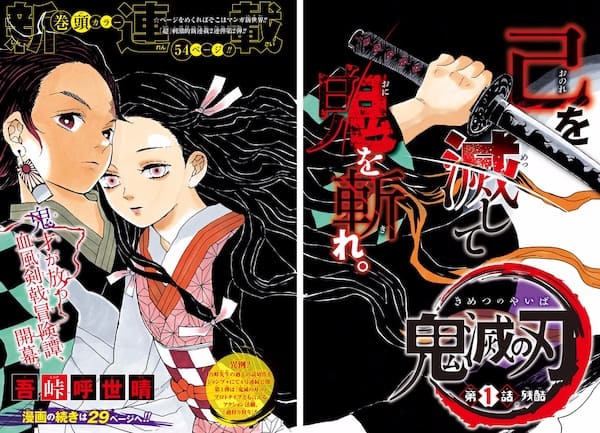
But before becoming a bestseller in bookstores, it had to be capable of sparking an enthusiasm and anticipation that would push readers to come back every week for four years.
In Medias Res
To achieve this, Koyoharu Gotōge uses the technique known in the West as in medias res. The first description of this way of creating suspense dates back to the Ars Poetica of Horace, a poet of ancient Rome.
He describes how The Odyssey begins “in the middle of the story” by showing the hero in a miserable position before describing all the events that led him to the situation presented in the first chapter.
For a more contemporary example in pop culture, let’s take John Wick (David Leitch and Chad Stahelski, 2014). The first seconds of the film show the hero painfully dragging himself out of a car: he is gravely wounded and collapses to the ground.
Will he survive? What did he do to be at death’s door? The rest of the film picks up the thread of events chronologically.
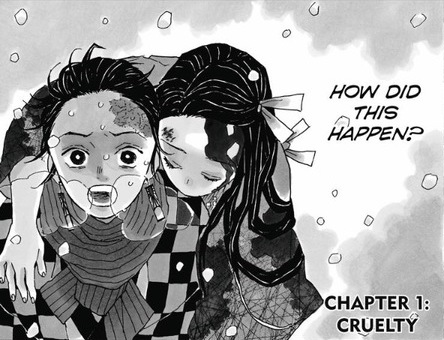
In Demon Slayer, the first page shows a teenager in a kimono carrying his unconscious sister on his back. He speaks to her and promises to save her, not to let her die.
How did it come to this?
You have to turn the page, and there too the narrative follows the course of events by returning to the starting point.
This way of telling actions in non-chronological order allows the story to show a dramatic situation from the very first page, which grabs the reader’s attention and leads them to ask questions that the narrative answers as it goes along.
What’s more, Demon Slayer plays on the reader’s expectations by referencing several manga genres.
Chambara?
Tanjirō Kamado is a teenager living in the forest in the mountains with his family. He goes into town to sell charcoal while his brothers and sisters, still too young, stay with his mother. He hopes to return with enough to celebrate the New Year.
In three pages, a large part of the background is established efficiently. The clothing and setting define a precise time and place.
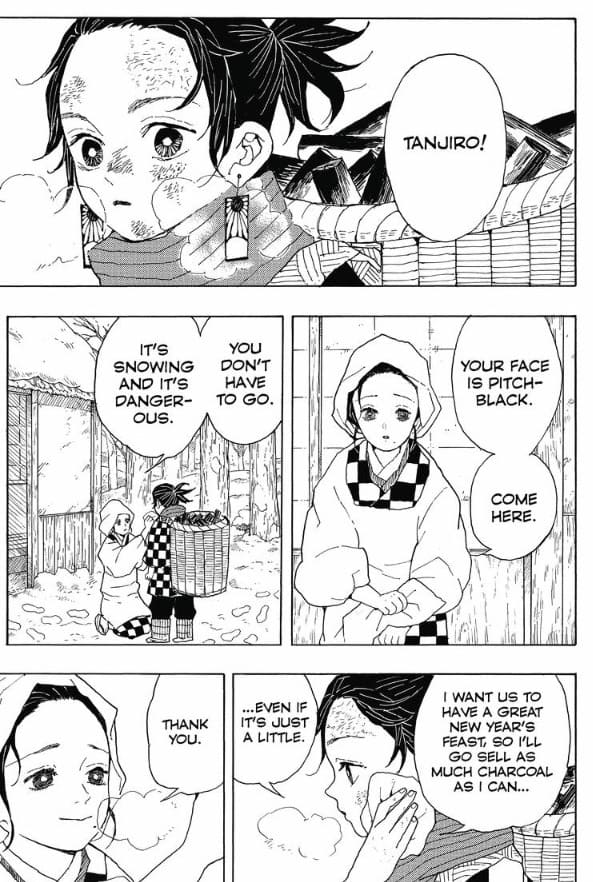
The plot takes place in an ancient Japan, which brings it close to jidaigeki, a genre comparable to historical fiction in Europe. Most of the time, these stories take place during the Edo period (1603–1868).
Since it’s a manga published in Shōnen Jump, one can expect sword fights. This brings it close to the chambara category, in the manner of Rurōni Kenshin(Nobuhiro Watsuki, 1994–1999) or Vagabond (Takehiko Inoue, 1998–ongoing).
It is originally a cinematic and theatrical genre equivalent to the Western cape-and-sword film. The term chambara corresponds to onomatopoeia indicating the sound of a blade cutting flesh.
However, Tanjirō above all seems to be an ordinary boy, not a samurai. The only slightly intriguing thing is that he seems to have a highly developed sense of smell.
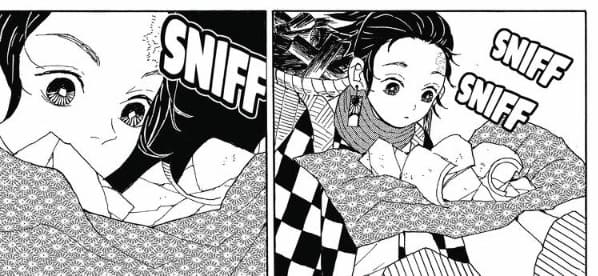
One might assume he will become a warrior, but nothing indicates exceptional physical ability.
He even sleeps at an old man’s house, who advises him not to travel at night because of demons. Like the reader, Tanjirō asks an essential question: can demons enter houses to kill the inhabitants?
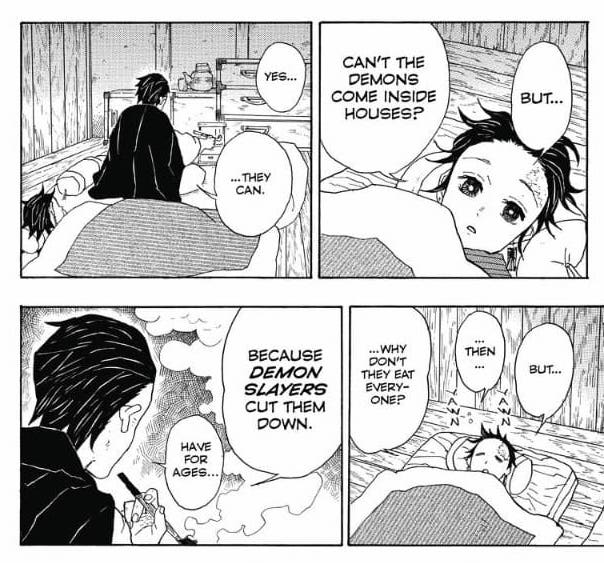
No, the old man replies: demon slayers kill them first.
Zombie?
This simple dialogue introduces a new variation in the chapter: sword fights will take place between demons and demon slayers.
And even if there is still no warrior by page 13, the dramatic aspect is highlighted in the last panel of the page. A wide shot shows Tanjirō stopped in front of bodies in the snow next to the house.
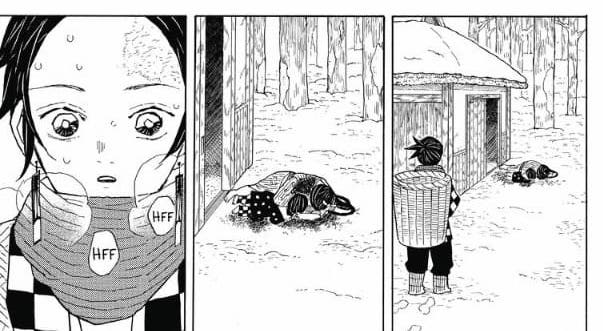
The tighter framing of the next panel confirms that they are dead. The last panel is a close-up of the hero’s horrified face, which encourages us to turn the page to find out what happened.
The following double-page spread shows the carnage. Like Tanjirō, the reader discovers that they are all dead.
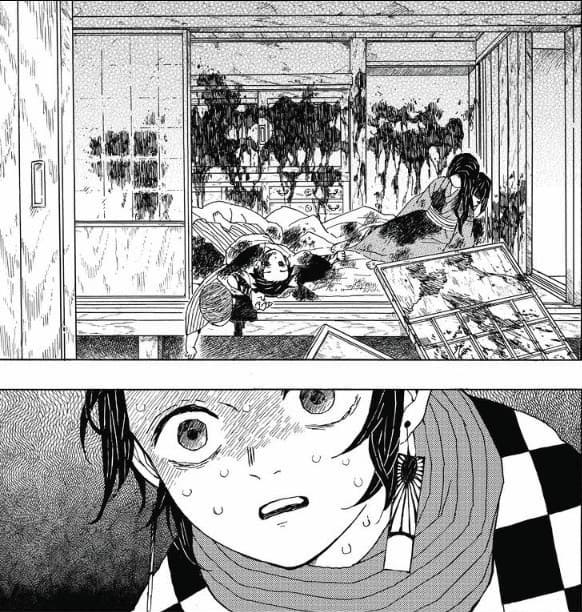
Page 20 picks up where the first page began. Tanjirō is carrying his sister Nezuko on his back. She is unconscious and injured but alive.
Well, almost.
She wakes up and tries to bite him. She has become a demon. For a Western reader, the depiction brings to mind the undead from Hollywood films.
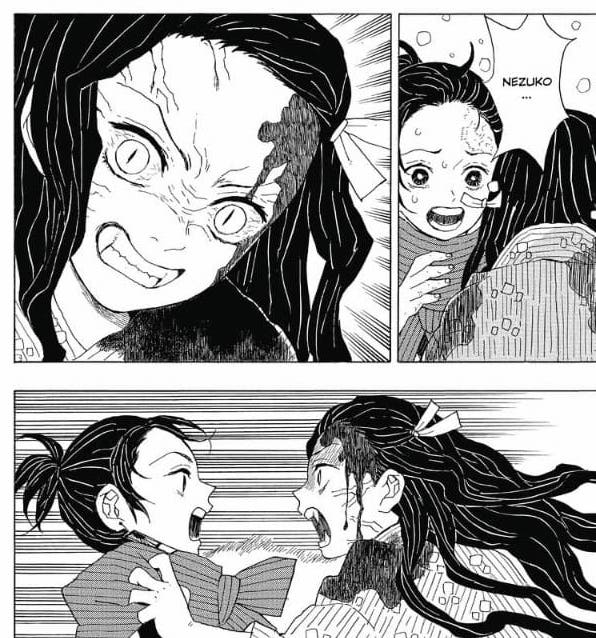
The fratricidal struggle is punctuated by Tanjirō’s thoughts. As in Naruto, the reader accesses the hero’s stream of consciousness, which makes the sequence more dramatic. He feels guilty for not having defended his family.
Nezuko has become a zombie, but the transformation is not complete. She is still able to recognize him. She cries. And one might expect the fight to stop.
But no.
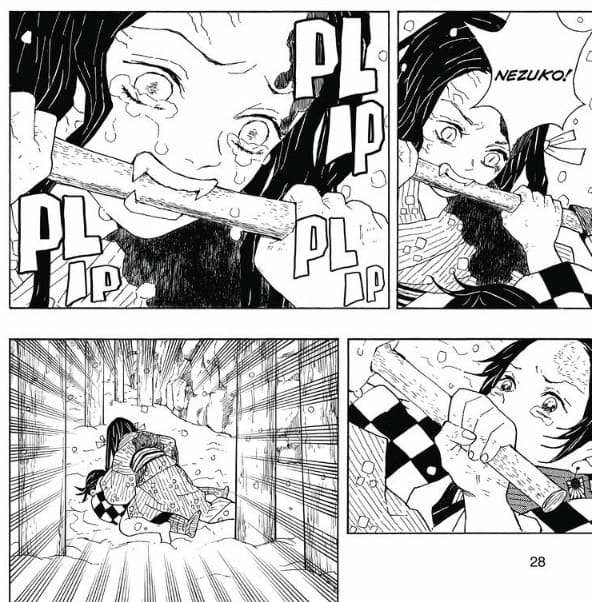
After an alternation between the faces of the two characters in a form of shot-reverse-shot, the last panel of the page has a wide framing. This makes us understand that another protagonist is watching them.
He intervenes, attempting to kill Nezuko, but Tanjirō and his sister manage to avoid the sword strike.
The Hero’s Quest
Just as the first page is in medias res, the appearance of the new character happens in the middle of the ongoing action. And, as in the first page, Tanjirō’s thoughts correspond to ours in order to encourage reader identification.
Who is this man?
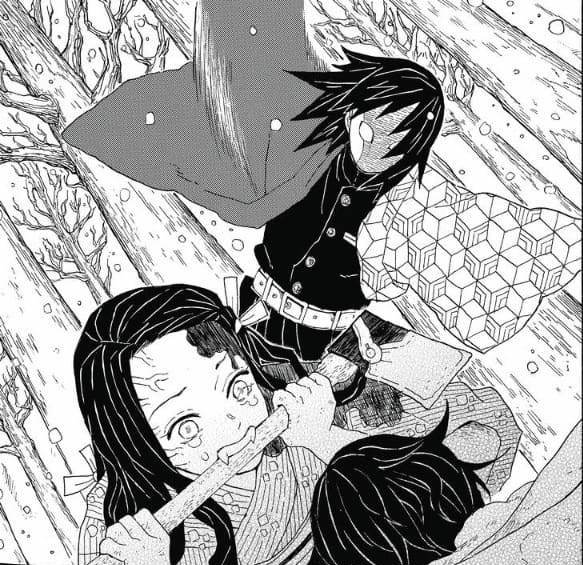
This time, Koyoharu Gotōge uses what in Europe is called the topos of the unknown.
The enigmatic nature heightens the suspense to hold the reader’s attention. The character’s name is only revealed at the end of the chapter: Giyū Tomioka.
In the meantime, many clues allow us to understand who he is. A full-body presentation shows his presence.
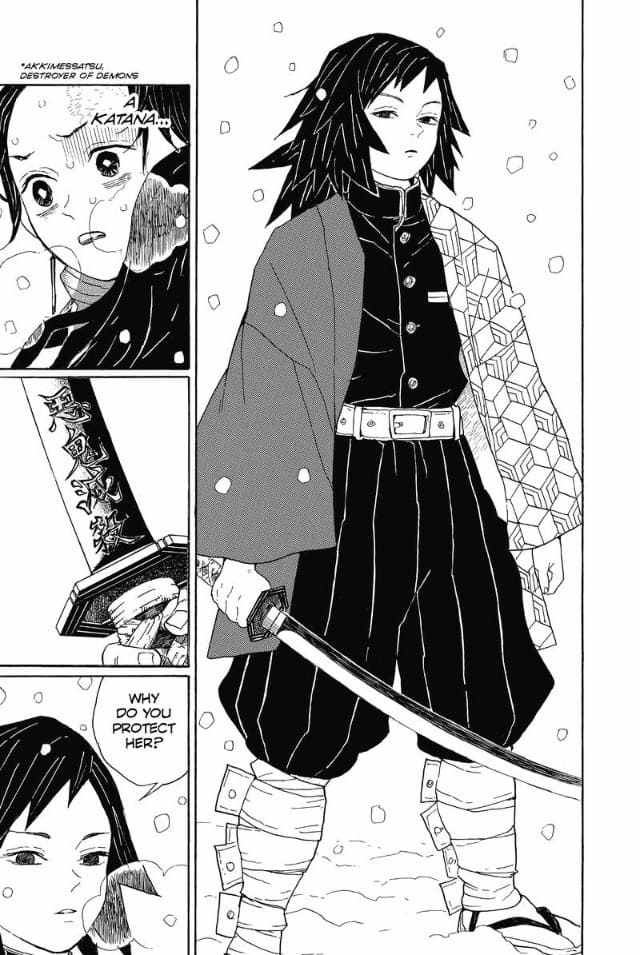
One panel serves as an insert on the handle of his katana to suggest that he is one of the demon slayers mentioned by the old man who hosted Tanjirō the night before.
Giyū’s thoughts let us understand that he has been in the same situation as Tanjirō. This suggests that the hero will also become a demon slayer.
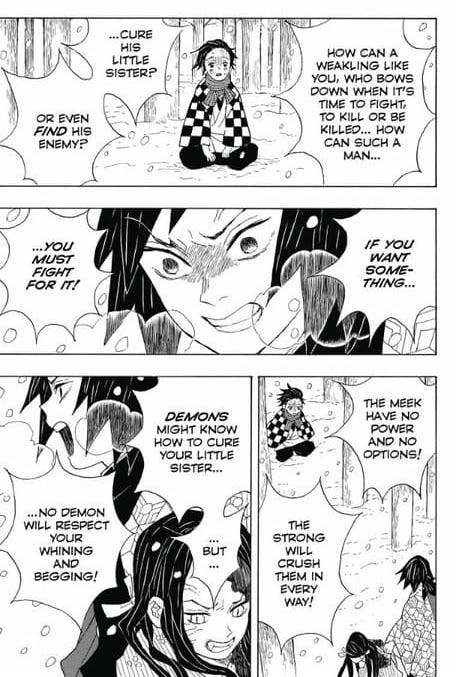
But for now, the teenager doesn’t have the right attitude. He begs Giyū to spare his sister, which triggers the latter’s anger.
He especially declares that there is doubtless a remedy known to demons, which launches the hero’s quest. Tanjirō does not draw his strength from anger but from the hope of a cure and love for his sister.
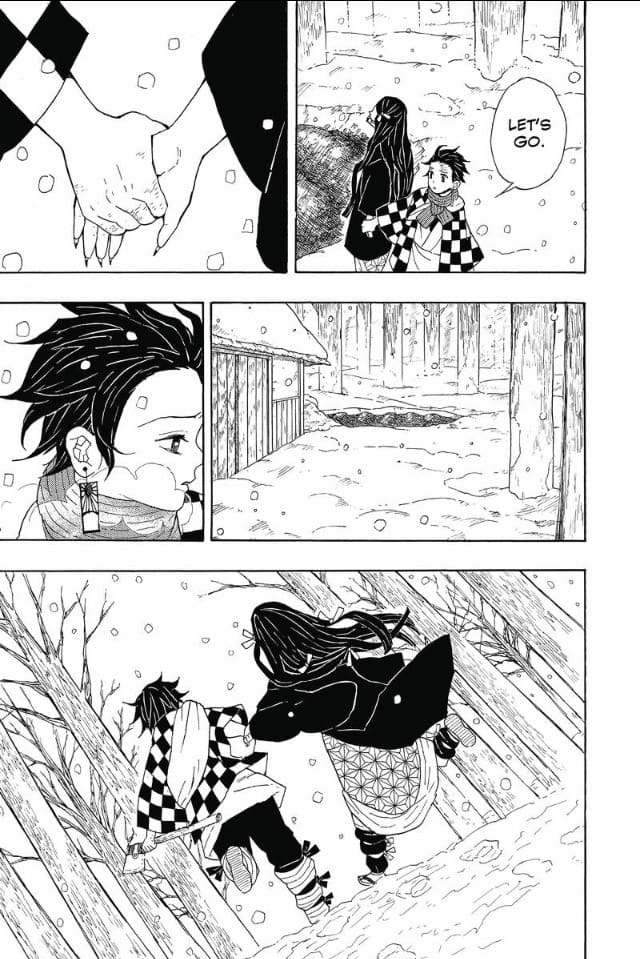
He manages to save her from Giyū, and Nezuko begins to protect her brother instead of devouring him. Brotherly love weakens the demon slayer’s convictions; he lets them live and advises them to go see a master to find help.
The first weekly installment of Demon Slayer thus ends with new questions to be resolved in the next chapter.
Who is Sakonji Urokodaki? What relationship does he have with Giyū? How will this help Tanjirō and Nezuko find a cure? How can they travel without Nezuko devouring someone or being killed?
These are some of the questions the reader may ask.
Since this first chapter managed to create mystery (in medias res and the unknown character) while resolving the enigmas initially posed, it is extremely satisfying to read.
We find the usual motifs of the hero’s quest, but at the same time the author introduces variations that make the whole thing unexpected.
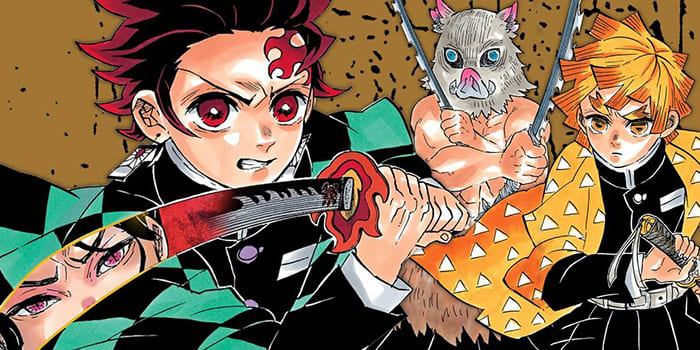
This incipit is therefore particularly effective in the way it establishes a complex universe and a somewhat unusual sibling relationship. What follows is even more delightful, and it’s not for nothing that the series is so popular.
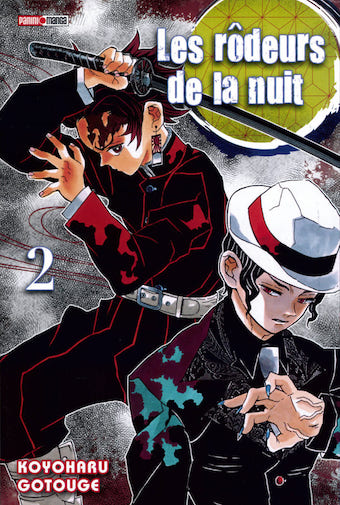
Panini Manga published a first French version under the title Les Rôdeurs de la nuit (2017–2018) before republishing it with the title Demon Slayer.
The excerpts used in this article are taken from the official Jump mobile app.
And if you’ve read this far and enjoyed the article, support this blog by buying me a coffee 🙂