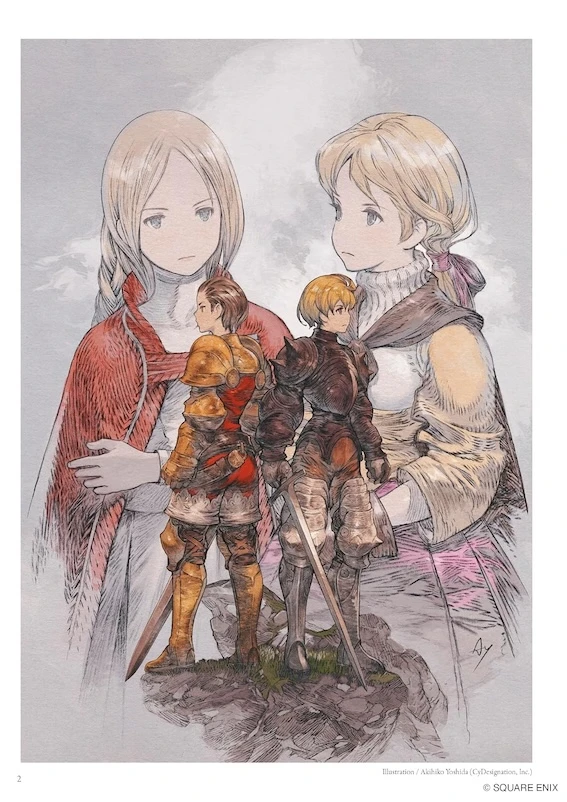
If Tetsuya Nomura moved from art direction to game creation, Yoshitaka Amano and Akihiko Yoshida remained faithful to the art of drawing and pursued careers outside Square Enix. Specializing in RPGs, Yoshida brings his delicate style to the world of Ivalice in the Tactics games and in Final Fantasy XII.
Known for his ochre color palette that recalls old paintings and illuminations, Akihiko Yoshida began as a graphic designer in video games at a time when this type of subtle camaïeu was not really technically possible. He then worked in small studios making RPGs on NES and PC, such as Zeliard(1987) and Faria: A World of Mystery and Danger! (1989) for Game Arts.
Yoshida admits that before working in video games, he knew nothing about role-playing games. His ignorance allowed him to develop his own style for creating monsters and creatures, instead of borrowing from what had been done in novels and other games.
He then did the graphics for Musashi no Bouken (1990) for Quest Corporation. It was in this company that he crossed paths with game designer Yasumi Matsuno and art director Hiroshi Minagawa. The trio became known to players through two titles on Super Nintendo: Ogre Battle: The March of the Black Queen (1993) and Tactics Ogre: Let Us Cling Together (1995). Yoshida handled character design, illustrations, and backgrounds. On this occasion, he notably created the tarot cards with which he refined his style, blending slightly faded colors that evoke the Middle Ages with characters whose features are inspired by manga.
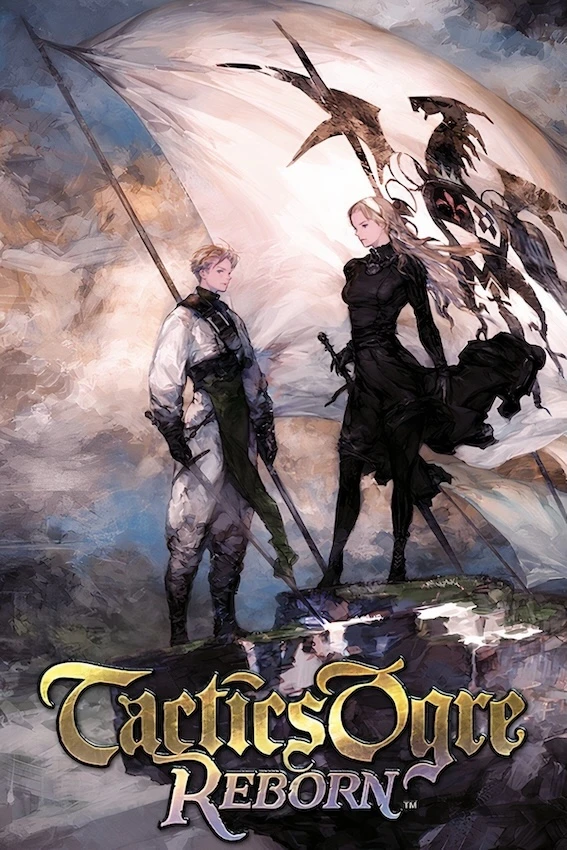
Matsuno, for his part, is a great admirer of Katsuhiro Ôtomo, creator of the manga Akira, himself inspired by Western graphic arts and the comics of Mœbius. Admittedly, the fantasy universes created by Matsuno have little connection to the science fiction worlds of Ôtomo, but the two illustrators share the same attention to characters in order to create a style distinct from the other designs fashionable in contemporary anime and manga.
Since Yasumi Matsuno’s universe aims to be closer to the medieval-fantasy of Western RPGs, Akihiko Yoshida creates characters with slightly more realistic features than those of other Japanese games of the time. Unlike Tetsuya Nomura’s character designs, which can blend perfectly into the audiovisual landscape of the 1990s, Yoshida’s seem to have escaped from an old grimoire.
The Faces of Ivalice
Following the success of Tactics Ogre, the trio of Yoshida, Matsuno, and Minagawa left Quest to join Square under the tutelage of Hironobu Sakaguchi, who was then in search of something new for gameplay.
Alongside the development of Final Fantasy VII, which became the new model for Japanese RPGs, with Tetsuya Nomura’s style and an unprecedented blend of cyberpunk and magic, Final Fantasy Tactics was released the same year and offered a universe that appeared more classical, but with robots and relics from a more advanced civilization. If the characters of Final Fantasy VII became icons for many players of the time, those of Tactics sparked the enthusiasm of a handful of fans discovering the title as an import in its American version.
The critical and commercial success of Final Fantasy Tactics allowed the trio greater freedom within Square. They then developed the RPG Vagrant Story, whose architecture is very strongly inspired by the medieval towns of the Bordeaux region. Even though the game does not explicitly take place in the world of Ivalice, many players and Square tend to include it in the same fictional world.
Before this game, Akihiko Yoshida had mostly conformed to the conventions then in place, with a “cute” look that particularly suited the pixel characters of the early Nintendo consoles. Moreover, when he was in charge of character design for the remake of Final Fantasy III (2006) and the art direction of the retro game Final Fantasy: The 4 Heroes of Light (2009) for the DS, he returned to a more kawaii art direction.
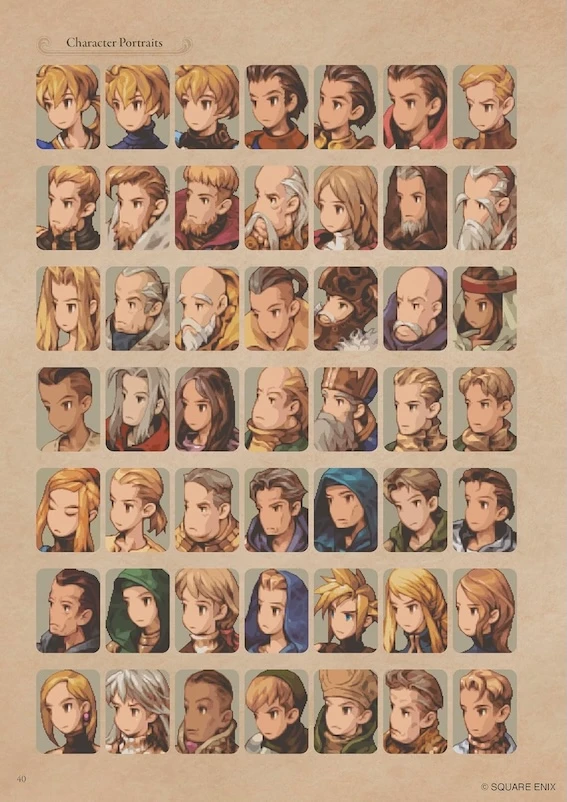
But with Vagrant Story and development on PlayStation, he benefited from greater freedom of expression and resources to do what he wanted. The characters with more realistic features also fit better into the ruined world of this RPG. The ochre and earth tones add a mineral dimension that reinforces the sinister atmosphere
Ivalice returns in Final Fantasy XII, whose development began just after the release of Vagrant Story. This time, the architecture is inspired both by the buildings of ancient Roman cities and by the Mediterranean rim, Turkey, and India. This influence can also be seen in the Final Fantasy Advance titles, which move away from the European medieval-fantasy of the first game in the series.
So that the heroes of Final Fantasy XII, Vaan and Ashe, would fit better into the continuity of the main saga’s installments, Yoshida used brighter colors that are not usually part of his preferred repertoire. But for the PSP remakes of Final Fantasy Tactics (2007) and Tactics Ogre (2010), he could not only return to his style but also add animated sequences and new illustrations.
False Farewells to Square Enix
The semi-open world of Final Fantasy XII and the success of the MMORPG Final Fantasy XIpushed Square to entrust the art direction and concept art creation of Final Fantasy XIV to Akihiko Yoshida, while Kazuya Takahashi and Keiichi Baba respectively handled the game’s backgrounds and character modeling, with Yoshitaka Amano once again taking care of the logo. This decision was also linked to the fact that Yoshida’s style was perceived as more Western and likely to appeal to an international audience.
Unfortunately, Square Enix’s second MMORPG had a catastrophic launch, and Naoki Yoshida was dispatched to relaunch the game. Akihiko Yoshida remained at the head of art direction. Final Fantasy XIV: A Realm Reborn was released in 2013 after an incredibly short development period. The game did more than simply save the company’s face; it became one of the biggest successes in its history.
However, Akihiko Yoshida left Square Enix that same year. Over the years, he had held increasingly important positions of responsibility and no longer had the time to draw as he wished. After 18 years of loyal service, he withdrew from the company that had allowed him to present his style around the world.
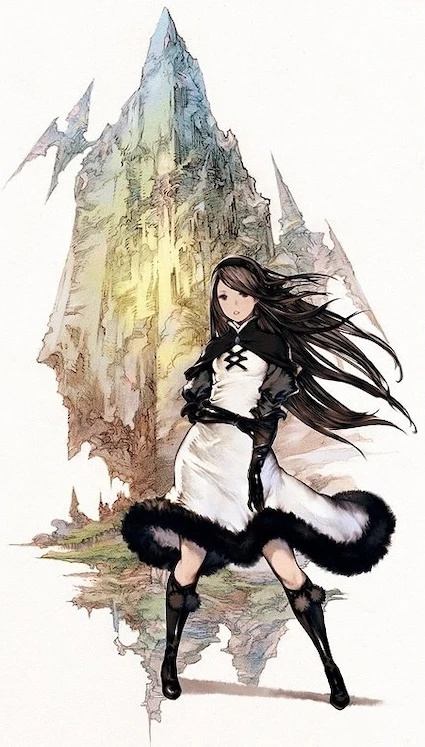
Becoming independent again, Akihiko Yoshida collaborated with his former colleague Yasumi Matsuno on Unsung Story: Tale of the Guardians, a tactical RPG project. But above all, he joined CyDesignation, a graphic design studio led by his former mentor Hideo Minaba, who had left Square Enix shortly before him. Within this structure, he worked on various game projects for his last employer, notably several Final Fantasy XIV expansions such as Heavensward (2015), Stormblood (2017), and Shadowbringers (2019), where the superb Viera appear.
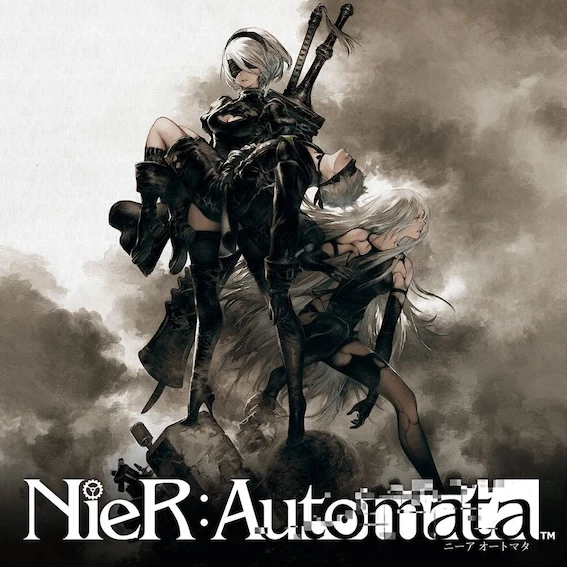
But he is above all known for two new series, still at Square Enix: Bravely Default (2012) and NieR: Automata (2017). He was still at Square Enix when the first game was released, and he continued to collaborate on the series for the sequel, Bravely Second: End Layer (2015), as a freelancer. For Yoko Taro’s game, he trades heroic fantasy for science fiction, but retains his delicate style and his female characters with subtle charm. Through Shadowbringers, the universes of NieR: Automata and Final Fantasy XIV intersect during a special mission.
Thanks to his regained independence, Akihiko Yoshida takes part in the development of several mobile games such as Lost Order (2017), but also in the creation of the animated film Maquia (2018) as character designer.
How does he manage to find inspiration for so many different projects? He collects illustration books and tries to incorporate everything around him into his drawings. Thus, the Judges’ armor in Final Fantasy XII and Final Fantasy Tactics Advance actually comes from the plastic protections worn by mountain bikers.
In a bonus video at the end of the Final Fantasy XII DVDs, he admits that when he has no idea, he starts by drawing the character from behind. Curiously, starting from that side allows him to unlock his imagination to design the protagonists.
Despite advances in computer hardware, he continues to use pencil, with computer coloring, playing with faded hues that evoke nostalgia for a bygone world. An admirer of Yôji Shinkawa, character designer of the Metal Gear Solid games, who has developed an iconic style and exhibits outside of video games, Akihiko Yoshida aspires above all to create personal universes far from the fashions of his time.
Leave a Reply