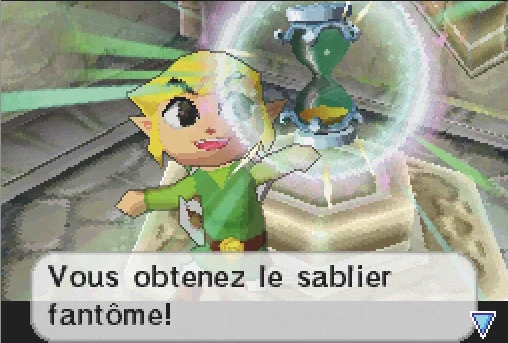
In the earliest video games, the notion of time was not really important. Space Invaders, for instance, was an endless game, where only the player’s death stopped the arrival of a new wave of invaders to be destroyed without any time limit. In Zelda, the notion of time somehow appeared in A Link to the Past. Over the course of the episodes, time took on growing importance in both gameplay and narrative. And it is no accident that the notion appears in the titles Ocarina of Time and Phantom Hourglass…
Day and Night
When video games were still pixel art, it was relatively difficult to create environments that changed over the course of the day. In A Link to the Past, nevertheless, it is at night that atrocious events unfold, throwing the hero into the adventure. Link is indeed awakened in the middle of the night by a telepathic message. In case the notion of night was not clear enough for the player, Link must take a lantern to venture outside. He must save Princess Zelda and take over from his dying uncle, who entrusts him with the essential gear of the hero: a sword and a shield.
In the first Game Boy game, it also seems to be at night that the shipwreck takes place, bringing Link to the mysterious island. The adventure likewise begins with an awakening. But this time, it is Marin who welcomes the hero, not Zelda’s voice.
Since, in the collective imagination, night is always associated with anxiety-inducing elements, it is not surprising that fateful events take place in dark moments.
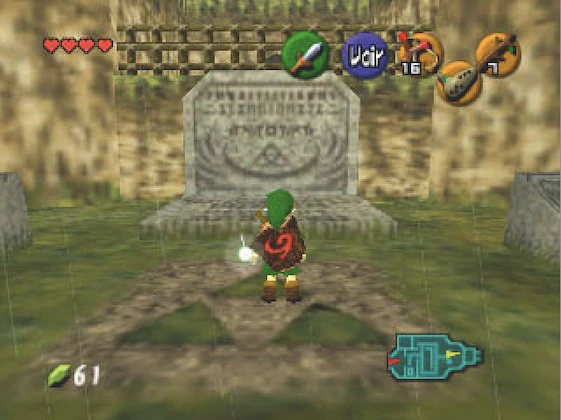
Subsequently, as console power increased, Ocarina of Time offered the player the ability to switch from day to night through the effect of a simple melody. Thanks to the Sun’s Song, which is deciphered in the Kakariko cemetery, it is possible to switch from day to night instantly. It doesn’t seem like much today, but at the time it was revolutionary and had a magical quality to it. Seeing the world at night was a discovery.
In The Wind Waker, the Sun’s Song is played with the baton but gives the same result. It is very handy because certain creatures are sensitive to daylight, and certain events only take place at night, or vice versa. Thus, one must wait for sunrise to see the drawbridge of Hyrule Castle lower.
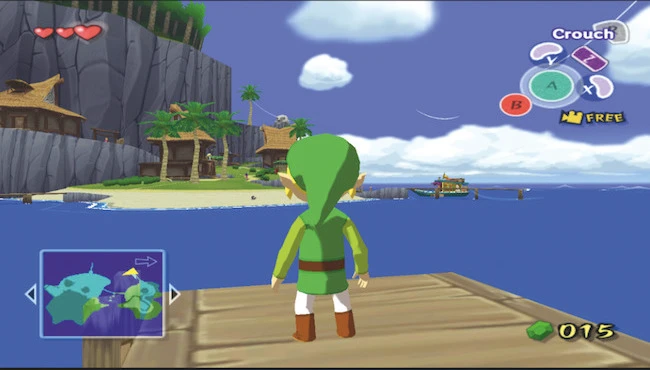
The addition of the day-night alternation makes it possible, on the one hand, to make the game a little more immersive by drawing closer to the real world where this cycle exists, and, on the other hand, to add gameplay elements for puzzles.
Transformation
This idea was already in germ in the first Zelda, since Link alternates between the surface world in broad daylight and the caves, which often require using a candle to see in the dark.
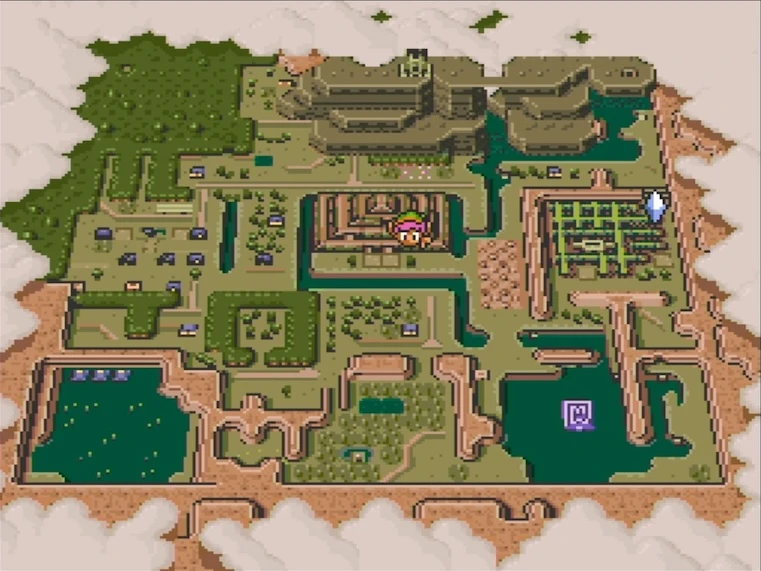
The same opposition between light and darkness is found in A Link to the Past, where the two worlds exist as such and are linked by magic. But to pass from one world to the other, one needs a Magic Mirror and a Moon Pearl so as not to change appearance in the Dark World: it is quite difficult to defend oneself once transformed into a pink rabbit…
The idea of transformation when in darkness is taken up again in Twilight Princess. This time, Link is a wolf and must find a way to free Hyrule from an eternal twilight. When he manages to rid an area of the insects of Darkness, he can regain his human appearance. Once in possession of Excalibur, he can transform into a wolf at will, which has many advantages, as his sense of smell is multiplied tenfold.
Limited Time
If the integration of the day-night cycle into a video game took some time, the notion of limited time, on the other hand, very quickly became popular with gamers. Performing an action within a set time amounts to taking on a small challenge, and we know that challenges are at the heart of many titles. This limited time also makes it possible to create a sense of urgency and to stress the player.
From the very first Zelda, candles have a limited duration, and the necessary actions must be completed before they go out. In A Link to the Past, the final battle requires dexterity and speed from the player, who must constantly relight two torches so that the enemy can be wounded.
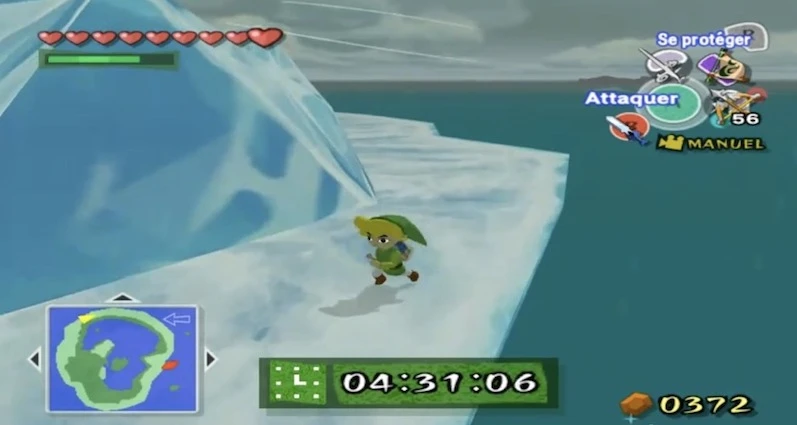
Beyond the light that goes out and gives the game a believable quality, other elements can legitimize limited time. In The Wind Waker, Link must reach a specific area in under five minutes on the Frozen Island, failing which he is transformed into a giant ice block.
But the two titles that most emphasize the notion of limited time are Majora’s Mask and Phantom Hourglass. The first takes place over three days that repeat until Link manages to thwart Skull Kid’s plans. These seventy-two hours correspond to far less time in the real world, and a clock constantly keeps you informed of the time slipping away.
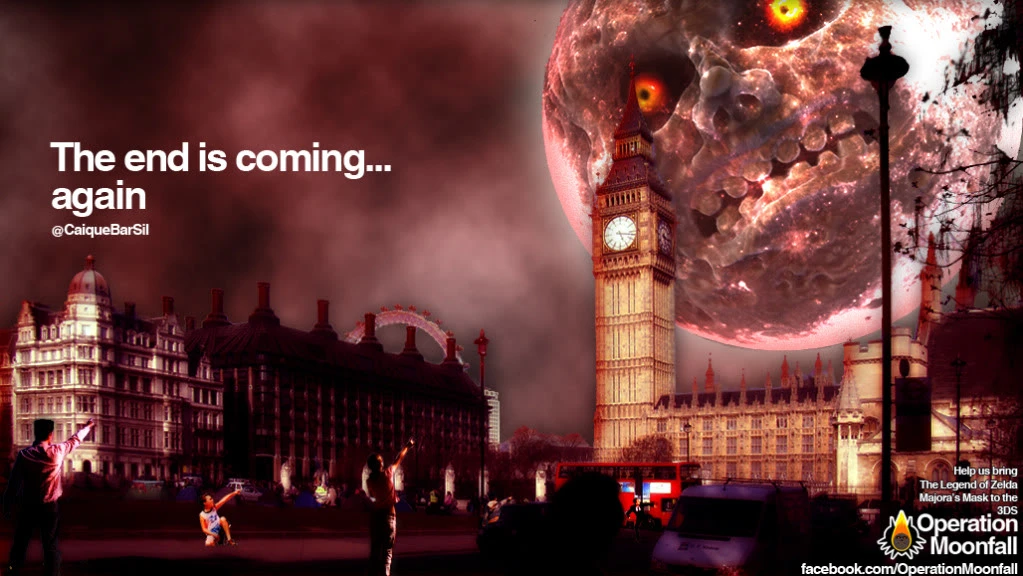
The alternation of day and night only heightens the sense of urgency and of time passing. Many small mini-games, also timed, increase the player’s stress. As for the various inhabitants of this world, they have an unshakeable schedule, which allows you to choose the right moment to see them once you have crossed paths with them for the first time.
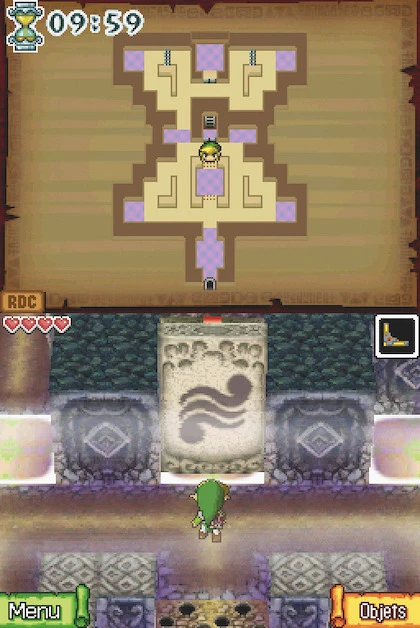
In Phantom Hourglass, the central dungeon is also timed, and Link must collect grains of sand for the magic hourglass that allows him to survive longer in this Temple of the Ocean King. And since you must go through the same levels several times, the stress is even greater: you have to run through the areas already visited so that you then have time to make mistakes and explore the new levels.
Clearly, these game mechanics were perceived by a majority of players as too stressful, and they are less present in the other Zeldas.
Growing Up?
Beyond the alternation of day and night, Ocarina of Timeplays on the chronology of the imaginary world in which the story takes place: Link can indeed become an adult or turn back into a child at will thanks to the Ocarina of Time, which allows him to move forward or backward by seven years
Here too, the game seemed magical to those who discovered it upon its release. For the youngest, who watched Japanese animated series on television, there was the magical girl genre, notably Mahō no Purinsesu Minkī Momo, a little girl who transformed into an adult thanks to a magic formula.
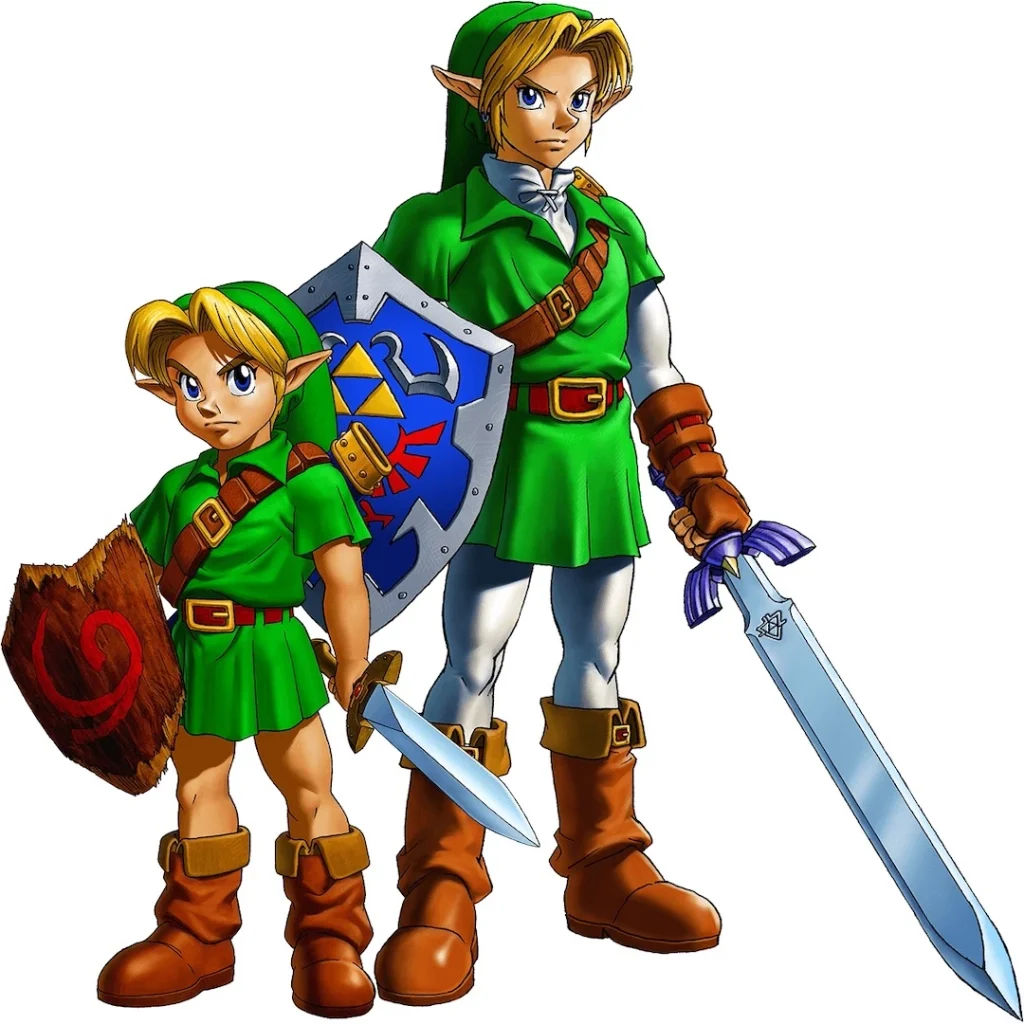
Through Ocarina of Time, one could have the impression of transforming thanks to the interactive nature of the game instead of simply watching the metamorphosis. Older players found another form of satisfaction in it: that of remaining eternally a child if they so wished.
Depending on the location, the small size of child Link becomes an advantage or a disadvantage. At the level of the plot, one discovers with interest what has become of the places traversed a first time through a child’s eyes. This helps give a little more depth to the secondary characters and allows the player to have more empathy for them.
In The Wind Waker, the passage of time is an even more important theme: Link must revive the sages of the past through the young people he encounters. The imaginary world thus acquires a history and an evolution of species, which contrasts with the kingdom of Hyrule, where time is suspended to prevent Ganondorf from seizing the world.
In Spirit Tracks, fans can also see the time elapsed between the two cel-shaded DS games, since one finds descendants of the characters from Wind Waker.
These titles are in some way a celebration of youth and its potential. At the end of the GameCube game, the king agrees to die to leave the future to the children. Moreover, The Wind Waker and Spirit Tracks begin with a symbolic date marking the passage to adulthood: twelve years for the inhabitants of Outset Island, the day of the graduation ceremony in Spirit Tracks.
Ultimately, the relationship to time has become one of the elements that form the essence of Zelda. The series is almost a nostalgic saga about a childhood full of promise in an aging Japan where Aonuma struggles to find an echo among the new generations.
Unfortunately, Miyamoto’s magic garden also seems to have difficulty convincing Western children, who seem more inclined to kill zombies and aliens than to explore the world.
Leave a Reply